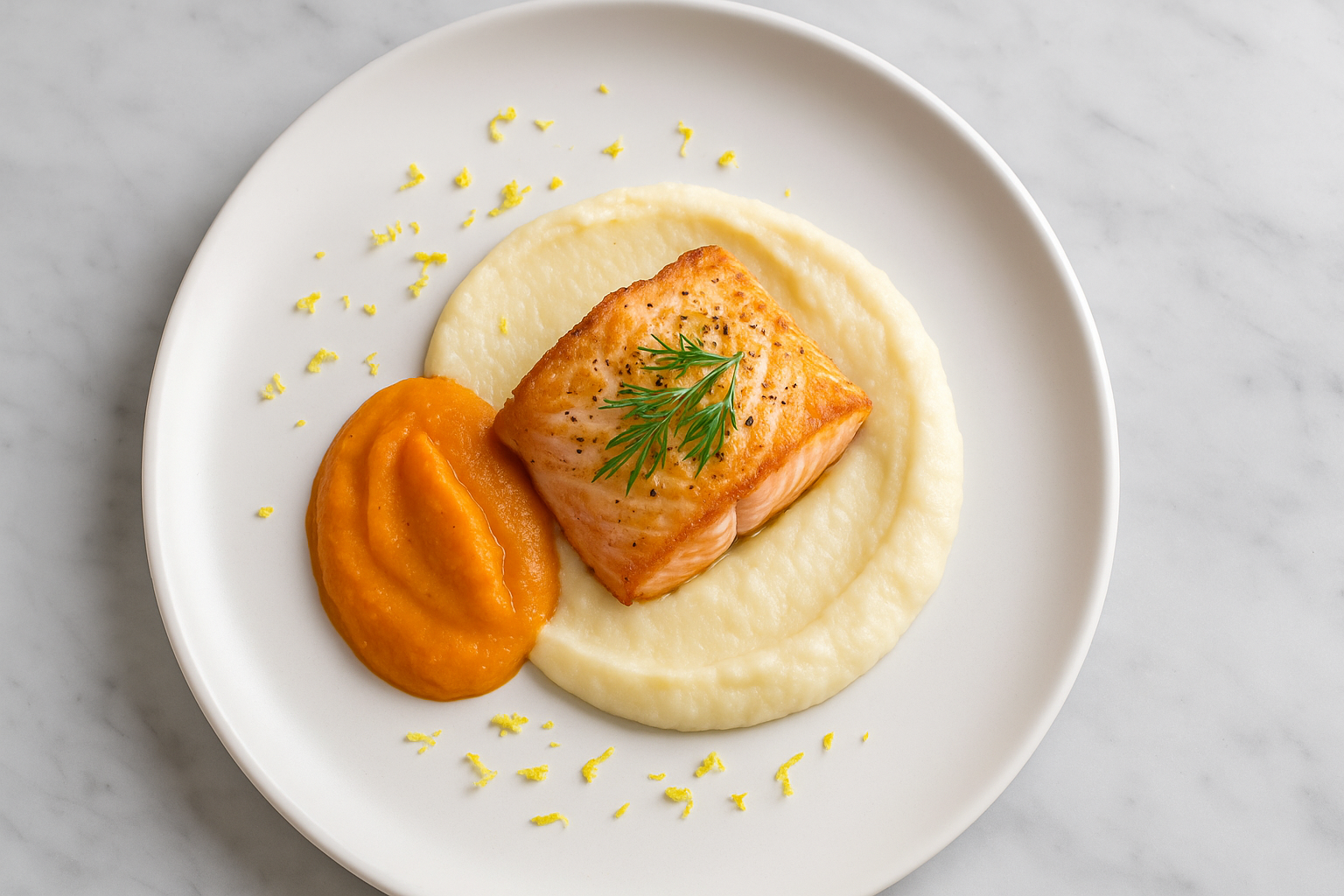
One of the easiest ways to make your food look instantly more appealing is to follow the 3-Color Rule. Chefs use it constantly because color creates contrast, energy, and balance on the plate. The good news? You don’t need fancy ingredients. You just need three colors that stand out from each other.
Here’s how it works.
1. Start With a Neutral Base
Neutrals make the bright colors pop.
Common neutrals:
- Potatoes
- Rice
- Bread
- Pasta
- Chicken
- Fish
- Cauliflower purée
- Beans
- White or light-colored sauces
These calm tones create space for your bold colors to shine.
2. Add One Bold Color for Impact
This is your main visual pop — the color that draws the eye.
Examples of bold colors:
- Deep red (beets, tomatoes, red pepper sauce)
- Bright orange (carrots, sweet potatoes, romesco)
- Vivid green (pesto, asparagus, herbs)
- Golden yellow (egg yolk, corn, turmeric sauces)
Just one bold color is enough to make the plate feel alive.
3. Finish With a Fresh Accent
The third color is the “spark” that brings the dish together. Think small, bright, and fresh.
Great accent options:
- Chopped herbs
- Lemon zest
- Pomegranate seeds
- Microgreens
- Sliced radishes
- Crumbled feta
- Chives
- Toasted nuts
- Thinly sliced chiles
This color should contrast the first two — it shouldn’t blend into them.
Putting It All Together
A balanced plate might look like this:
- Neutral: Chicken or potatoes
- Bold: A bright orange carrot purée
- Accent: A sprinkle of green herbs or chives
Or:
- Neutral: Pasta
- Bold: Red tomato sauce
- Accent: Green basil leaves
Or:
- Neutral: Cauliflower purée
- Bold: Seared salmon (deep orange)
- Accent: Lemon zest + dill
Three colors. Endless combinations.
Why the 3-Color Rule Works
Color affects how we perceive taste. When a dish looks vibrant, the brain expects it to taste better — and you experience it as better.
This rule also:
- Adds depth without clutter
- Helps avoid monochromatic plates
- Makes simple meals look intentional
- Provides a natural sense of harmony
It’s the fastest way to elevate home cooking without adding complexity.
Try This Tonight
Whatever you’re making, check these three boxes:
- Do I have a neutral?
- Do I have one bold color?
- Do I have one fresh accent?
If not, add one tiny element — herbs, lemon zest, a few pomegranate seeds, a drizzle of pesto — and watch the dish transform.
Final Thought
Plating doesn’t need to be complicated. With the 3-Color Rule, you can take any meal — even leftovers — and make it look vibrant, balanced, and restaurant-worthy in seconds.